Custom Search
|
|
  |
|
|
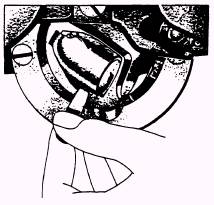
Turn the balance wheel forward to bring the needle bar and thread take-up lever to its lowest position. With the aid of the shuttle opening tool or a small screwdriver, insert the blade end in the slot in the spring latch beneath the shuttle cylinder (fig. 9-20). Press the latch away from the cylinder and it will swing out. The bobbin will then slide out of the shuttle cylinder. Winding the Bobbin Place the bobbin on the bobbin winder spindle and push it up closely against the shoulder. The small pin in the shoulder must enter the slot in the bobbin. Pass the thread from the thread stand through the hole in the left side of the bobbin from the inside. Push the bobbin winder pulley up against the balance wheel, and place the bobbin winder
Figure 9-20.-Removing the bobbin from the shuttle cylinder.
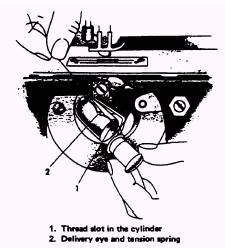
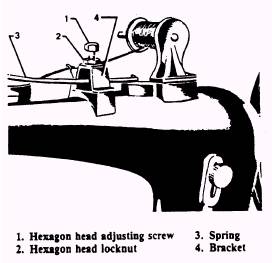
Figure 9-21.-Replacing the bobbin. latch in position. Raise the presser foot and start the machine. The end of the thread should be held until a few turns are wound on the bobbin to prevent slipping. When sufficient thread has been wound on the bobbin, the bobbin winder will stop automatically. Replacing the Bobbin and Threading the Shuttle Take the bobbin between the thumb and forefinger of the left hand, as shown in figure 9-21. The free end of the thread should be drawn off from the underside toward the right. Place the bobbin in the shuttle cylinder as far as it will go. Draw the thread into the slot in the cylinder and under the tension spring into the delivery eye. Push the shuttle cylinder in until it is locked by the spring latch. There should be about 3 inches of thread hanging free from the shuttle with which to begin sewing. The tension on the needle thread is regulated by the thumb nut at the front of the thread retainer disks. The tension on the thread retainer disks should be just enough to cause the tension wheel to turn when the thread is taken from the spool. The tension on the bobbin thread is regulated by the small screw that holds the tension spring to the shuttle cylinder. To increase the tension, turn the screw clockwise. To decrease the tension, turn the screw counterclockwise. The tension on the machine and bobbin threads should be checked by test-running a row of stitches on scrap material. The lockstitch should lock in the center of the material, as described for the 31-15. When sewing webbings with the 7-33 sewing machine, the specifications for webbing sewing should be checked to determine at what ply of the webbing the stitch should lock. Regulating the Length of Stitch The procedure for regulating the stitch on the 7-33 'sewing machine is the same as for the 31-15. Regulating the Pressure on the Material The pressure on the material is regulated by means of the hexagon head screw (1). (See figure 9-22.) Loosen the hexagon head locknut (2) and turn the adjusting screw clockwise to increase the pressure, or counterclockwise to decrease the pressure on the spring (3). When the desired pressure has been obtained, hold the adjusting screw with a wrench to keep it from turning while
Figure 9-22.-Regulating the pressure on the material. the locknut is being tightened against the bracket (4). The pressure should be just heavy enough to enable the feed dog to move the work along evenly, and to prevent the work from rising with the needle. Preparing the Sewing The same sewing preparatory procedures are used for the 7-33 as for the 31-15 sewing machine, except there is no knee lifting device. The hand presser bar lifter is the only device provided for lifting the presser foot on the class 7-33 sewing machine. |
 |