Custom Search
|
|
  |
|
|
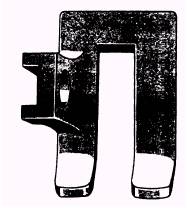
Removing the Work Stop the machine and raise the thread takeup lever to its highest position. Draw about 3 inches of thread through the thread retaining disks. Raise the presser foot and draw the work back, cutting the threads close to the material. Leave the ends of the threads under the presser foot . Modification of Presser Foot for Webbing Sewing The modification of a presser foot is illustrated in figure 9-23. The presser foot should be cut
Figure 9-23.-Modification of presser foot for webbingsewing. along the dotted line, removing the right portion of the foot. After cutting, the edges should be filed down to a smooth round finish. Parachute harness and webbing sewing is classified as a major repair. However, there are various other sewing projects requiring webbing sewing. ROTARY SEWING MACHINES Some of the most commonly used rotary sewing machines are the class 111 W series. They are the type used to teach basic sewing in PR "A" school, and can be found in almost any PR shop. CLASS 111 SEWING MACHINES The class 111 sewing machines are one line (single needle) lockstitch machines designed to sew medium weight and heavyweight material. They are capable of sewing at a speed of approximately 3,000 stitches per minute (spin). The lockstitch is formed in the bobbin assembly by the rotary hook on the 111 machines. The class 111 machine is commonly used for sewing aircraft protective covers, upholstery, and soundproofing. DIFFERENT MODELS OF THE 111 W SEWING MACHINE The following text discusses the various models of the 111 W sewing machine. 111 W 150 Sewing Machine The 111 W 150 sewing machine is a high-speed, single-needle, lockstitch, compound feed machine employing a gear-driven rotary hook with a vertical axis. It is designed for sewing medium weight fabrics such as
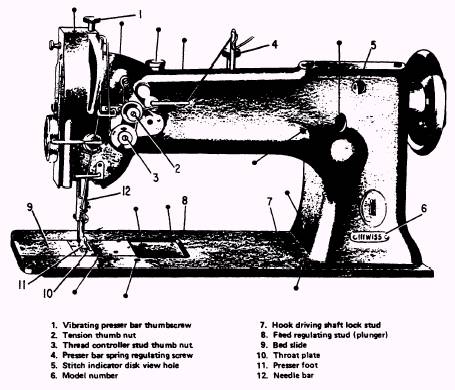
Figure 9-24A.-Class 111 sewing machine, front view showing oiling points. 9-18 flight clothing, nylon, twills, and lightweight canvas. |
 |