Custom Search
|
|
 
|
||
|
If you were notified that you won a brand new Jaguar or Lamborgini, you would probably be ecstatic. If you were presented with a truckload of unidentified, assorted parts and told that you now had everything
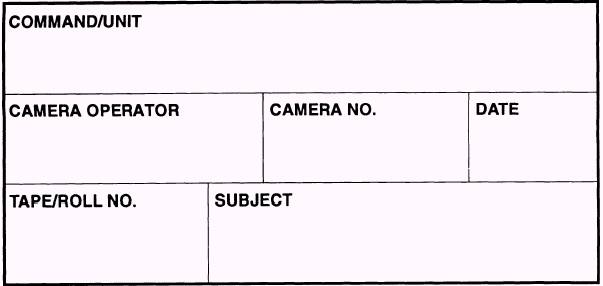
Figure 13-16. The slate. required to put the new car together, you probably would not be entirely grateful. Maybe you could assemble it (if you were an experienced mechanic), but you know that more information would save you time, frustration, duplication of effort, and help tremendously toward a successful outcome. On the other hand, if every part were clearly identified and the exact relationship to every other part was unmistakably described, you would certainly appreciate the gift much more. Being faced with several thousand feet of unidentified videotape is very much the same kind of situation. The biggest problem encountered by imaging personnel in the Department of Defense during Operation Desert Storm was the lack of identification of exposed imagery. There were literally boxes of film and videotape lining the passageways in the Pentagon. Most of this imagery was of little value because it was not identified, or it was labeled inaccurately. Accurate records are almost as important as good video coverage in achieving a professional product. Imaging products must be labeled, so the subject matter and subject location are easily identifiable on the tape. Often, there is no opportunity for personal contact between the cameraperson and editor; therefore, records identifying the filmed image content are the only information available. Logically, the better the records, the more useful the videotape. The opposite rule is also true. Inaccurate records can make the video coverage useless. Do not let that happen to your work. |
 |
|
|
||