Custom Search
|
|
 
|
||
|
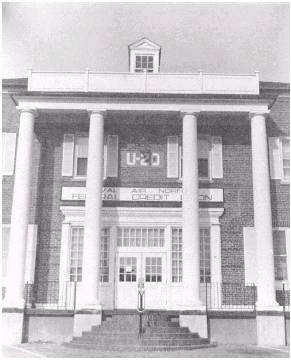
Corrective photography is the correct representation of three-dimensional objects on a single plane (the photograph). At one time or another, you have probably taken a picture with the camera tilted up or at an angle to the subject, and you probably learned by experience what the resulting distortion did to an otherwise good picture. Most of the cameras you use on location do not have movements or adjustments for correcting vertical or horizontal distortion that is created when the camera is tilted or used at an angle to the subject. Such inflexible cameras do not allow you to present the subject correctly from any camera position that shows two or three sides of the subject. For the correct presentation of such subjects, camera movements must be used. Many students of photography, as well as many self-acclaimed pros, are inclined to use cameras lacking the essential advantages (camera movements and adjustments) of a view camera. Instead they use their regular camera for every assignment even when a view camera is the only correct camera for the job. Refer to chapter 4 to re-familiarize yourself with the view camera. Figure 6-19A and figure 6-19B show the
PHAN M. Lakner Figure 6-19A. Uncorrected vertical distortion.
PHAN M. Lakner Figure 6-19B. Correected vertical distortion. difference in uncorrected and corrected vertical distortion. |
 |
|
|
||