Custom Search
|
|
 
|
||
|
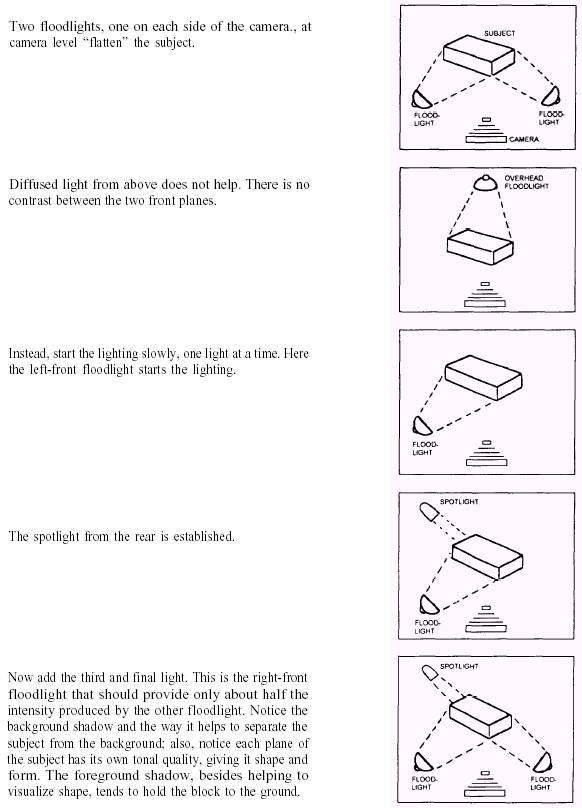
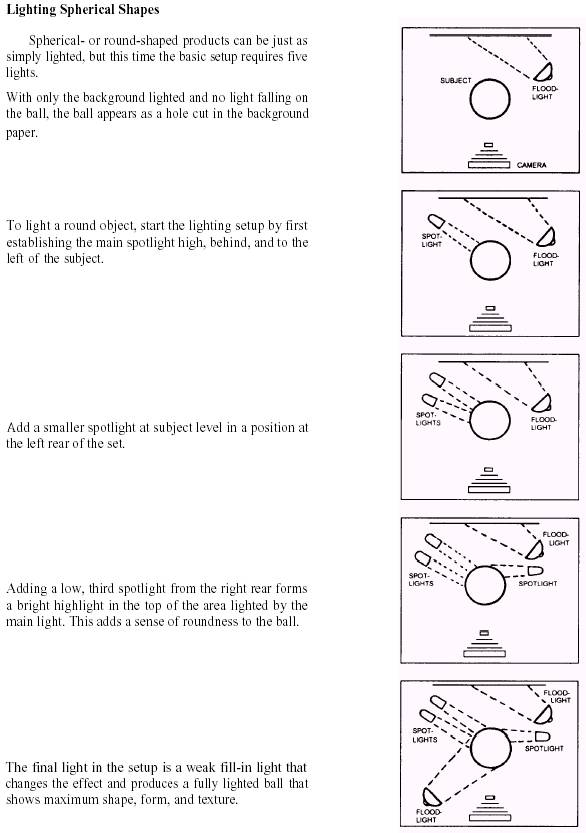
Most small product items fall under two basic or general shapes: rectangular and spherical. The illustrations in the following paragraphs show ways that basic lighting can be used to present shape. Although a perfect rectangle and a perfect circle are used in the illustrations, they are not intended to limit your lighting setups. You must, of course, make lighting adjustments, depending on how rectangular or spherical the subject is and the way you want to present it. Lighting Rectangular Shapes Rectangular- or box-shaped products can be lighted with just three lights-a spotlight from the rear and two floodlights, one on each side of the camera.
Through experience, you will learn what effects to expect from lighting. Good lighting is created through an orderly, thought-out process involving several steps that should be taken in chronological order: 1. Previsualize. You should form a mental picture of how the subject should look What should be shown? What part of the subject should be featured or be the center of interest? 2. Determine what type of lighting to use. From what direction should the main light come? Where should the fill lights be located? From what distance should the light come? 3. Select the equipment that can best do the job. What camera 4x5 inch, 8x10 inch, 2 1/4 inch, or 35mm? What kind of lights-strobe, incandescent, flood, or spot? What accessories are needed-reflectors, barn doors, umbrellas, and so forth. 4. Establish the lighting. Is the key light doing what you want? Would another light do a better job? Is there enough shadow detail? Is more or less fill light needed? Are there too many highlights and are they in the right places? Are the highlights too bright? Do each of the lights add to the overall quality of the lighting, or can some of them be eliminated? Will the subject record on the film as previsualized? 5. Determine the exposure. What should be the exposure for the highlights and the shadows? What is the correct exposure for the overall set? Will the film record the contrast range between important highlights and shadows? 6. Check the set. Is light spilling onto the camera lens causing flare? Is the composition as it should be? Are important details obstructed? 7. Expose the film. |
 |
|
|
||