Custom Search
|
|
 
|
||
|
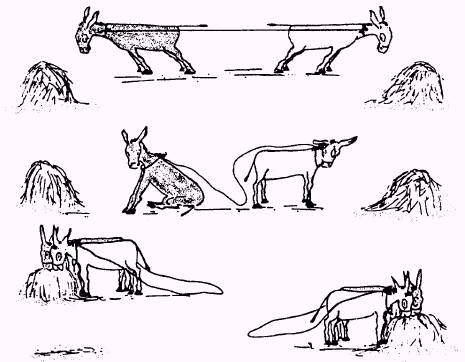
DEVELOPING THE "WE" CONCEPT People who are "loners" are determined to get to a destination without owing anyone for anything. They refuse to help others, belittle everyone else's accomplishments, and avidly point out others' mistakes. These people have great difficulty working as a member of a team. Teamwork improves only when all members overcome this problem by learning to view themselves as part of the team. To help them do that, encourage them to begin thinking in terms of we: We members of the contact point. . . We members of the ship or station. . . We members of the Navy . . . Help them to see that being a member of a team doesn't take away from their importance. Help them to see that working as a member of a team improves the effectiveness and productivity of the contact point.
DEVELOPING CONFIDENCE Confidence is that quality that enables us to make decisions or to take actions without the constant fear that we might be wrong. It doesn't rule out mistakes, but we are less likely to make them when our evaluation of facts is not muddled by nagging doubts. Confidence also enables us to face a mistake, admit it, correct it, and then go on to the next job with the assurance that we can handle it. When team members develop confidence in their abilities, they become willing to help their teammates as well as the customers. Team members working together is what teamwork is all about. BENEFITING FROM MISTAKES You benefit from incorrect decisions and actions if you learn how to avoid repeating your mistakes. Many supervisors recognize that when they say, "I don't condemn mistakes as long as you don't continue to make them." When team members recognize the consequences of a mistake, they are less likely to repeat the same mistake. Therefore, a mistake, discovered and corrected, helps to improve teamwork. When an assistant burned out the filament of an experimental light bulb by applying too heavy a charge of electricity, Thomas Edison remarked, "Don't call it a mistake; call it an education." Adopting this positive attitude enables us to obtain the maximum value-for the customer and for ourselves-from our work. MAKING A PERSONAL INVENTORY Now that you have completed reading this manual, you probably have been able to relate some of the situations to experiences you have had. Have you also tried to find similarities between the attitudes that you possess and those shown in the examples and discussions? The questions that follow have been adapted from the checklist used in chapter 2; use them to make a personal inventory of your skills as a contact point representative: l Do I present a good personal appearance at the contact point? l Am I familiar with all the responsibilities of my rating? l Am I competent to manage all the responsibilities of my current assignment? l Have I organized my work and time so that I give the most efficient service possible? . Am I aware of the importance of records, and do I keep them current and complete? . Do I know the content and arrangement of publications regularly used at my contact point? . Do I speak and write clearly and understandably to the best of my ability? l Do I accept the responsibility for doing my job as it should be done so that constant supervision is not necessary? l Do I show consideration for my coworkers by what I say and do? l Do I treat each customer as an individual with individual needs? l Do I analyze customers' problems correctly so that the first action I take is the proper action? l Do I provide the same quality of service to all customers regardless of their grade, rate, or personal characteristics? . By not handling a problem as I should, do I cause delays or other inconveniences to the customer? . When I answer a customer's question, am I absolutely certain that the information is correct? . Does my response to the customer reveal a pleasant, friendly nature? . Does my response to the customer show a willingness to help? l Does my response to the customer indicate concern for the problem? . Does my response to the customer instill confidence in my ability? . If I were the customer, would I be satisfied with the service I received? |
 |
|
|
||