Custom Search
|
|
 
|
||
|
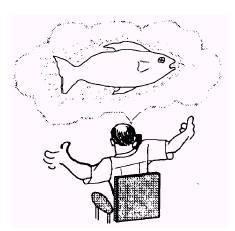
MEETING UNEXPRESSED NEEDS If you have the impression that you are to act only when the customer pushes a button, then you have the wrong impression. True, you perform much of your work in response to customer's expressed needs; but at times you should take the initiative. The PO3 mentioned in the above section had heard about the new entitlement for shipping household goods, but had he heard about the other portions of the instruction: dependents' travel pay and dislocation allowance. Each command makes a constant effort to make sure that everyone "gets the word" through the use of bulletin boards, notes in the plan of the day, and announcements at quarters. You can improve this effort by volunteering information that the customer can use but may not know to ask for. Customers may get information from many sources, but that information may not be correct. During your conversations with these customers, you can usually tell from their questions or comments that they have received incorrect information. When that happens, be sure to tell them the correct information. GIVING SIMPLE EXPLANATIONS Let's look at a story of a junior officer who was assigned to draft a letter for the captain's signature. After much work, the junior officer had a draft ready to go topside for approval. The next day, the officer was astounded when the captain returned the draft with the word "KISS" printed in bold, red letters across the first page. Did that mean the captain liked it? The officer pondered the meaning of the word for awhile and then began to ask others in the office if they knew what it meant. An old-timer finally explained, "That is the 'old man's' way of telling you to do it over. It means, Keep it simple, stupid!" That expression may be rather crude, but it is good advice. Anytime you explain something to someone, your explanation must be understandable. You should not place the customer in the embarrassing position of having to ask for an explanation of unfamiliar terms. If you use a term in a way that implies the customer should know what it means, there will be an even greater reluctance to ask for clarification. Watch for signs that indicate the customer does not understand your instruction or explanation. When you see those signs, back up and rephrase your explantion or instruction. USING TELEPHONE COURTESY Few inventions can equal the telephone for efficient labor-saving and time-saving convenience. However, because we use it carelessly, we don't always obtain maximum benefit. Good telephone communications require more thought than face-to-face communications. You don't think so? Consider a sportsman who is bragging about the success of his recent fishing trip. Upon meeting a friend, he explains by spreading his arms and saying, "I caught one this big!" When talking face to face, our gestures and facial expressions help to convey the intended message of our words. However, if the sportsman makes the same statement while talking on the telephone, his words have little meaning.
When customers come to your contact point during a time when you are busy helping others, they can see the reason for your delay in serving them. However, when they call on the phone, they cannot see the reason for your delay in answering. If the phone rings several times before you answer it or if you answer and immediately say, "Hold on," they may think you are telling sea stories instead of tending to business. Suppose you have almost completed a financial report; you have only a few more figures to add, and then you will know if it's going to balance. The phone rings and you ignore it. It rings a second and third time, and you begin to mutter obscenities about the aggravation. In this scenario, the phone rang at an inconvenient time; but the caller had no way of knowing that. You might as well have answered it on the first ring since it interrupted your concentration anyway. Besides, answering immediately after the first ring saves time for both you and the caller. To swear at the phone for ringing is as logical as throwing a hammer after having smashed your thumb with it. At times when you answer the phone, you may be too busy to help the customer. When that happens, ask if you can call back rather than keep the customer waiting on the phone for an extended time. A minute spent waiting on the phone seems twice as long as a minute spent waiting at the contact point. When you answer the phone, first identify your office or activity and then identify yourself. As in case number 7, some contact point representatives answer the phone correctly, but they speak so fast the customer can't understand what is said. When you speak too fast, you may then have to listen to a long, involved story before you can refer the customer to the correct number. Just as facial expressions and gestures help us express a thought, they also help us convey feelings and attitudes. The words and the voice you use over the phone must do the entire job. Tact is, therefore, vitally important. Telephone use presents an added problem for the person who has difficulty with the English language or who has a speech defect. The same consideration should be shown to such a person over the phone as when talking face to face. Perhaps the guiding principle when using the telephone should be to remember that you are not talking to a telephone, but to a person. |
 |
|
|
||