Custom Search
|
|
 
|
||
|
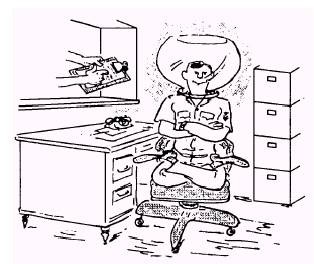
CUSTOMER ASSISTANCE The mechanics of your job are normally of no concern to the customer unless they have a direct bearing on the customer's problem. However, they sometimes might be the reason for action or a lack of action contrary to the customer's wishes. In that case, some explanation will increase the customer's confdence in your ability and knowledge. On the other hand, needless discussion about how hard your job is or how much effort you are exerting to get the job done would be counterproductive. The customer is not likely to feel an overwhelming gratitude for a job done under protest. You are never justified in ignoring a customer; to be ignored is discouraging to a customer. There are times when you can' t drop what you are doing; however, you can acknowledge the customer's presence. If you are busy with a customer, a look and a nod will acknowledge the second customer's presence. However, your actions to put the second customer at ease should not cause the first customer to feel rushed. If you have other brief work that you want to finish, one sentence of explanation is sufficient. Most people don't mind a reasonable wait when they know that you are aware of their presence, but they should not have to beat on the counter to get your attention.
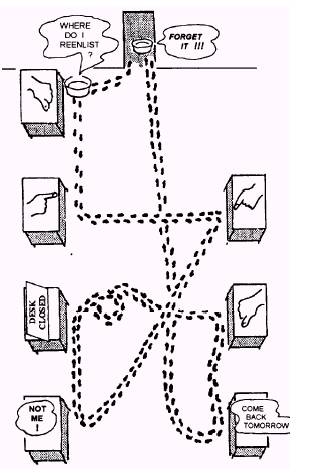
Customer service at large activities is frequently a problem for customers. A dispensary or sick bay provides most services in one room. On-the other hand, a hospital provides services in many rooms and usually on several floors. The customer can get the feeling of playing hide-and-seek at any command, large or small. When referring the customer to another location (desk, office, or building), be courteous and be sure to give good directions. ANSWERING QUESTIONS Answering questions at a contact point requires a sizable amount of patience. That is especially true when you must answer the same questions over and over. Some of the questions are simple, others are hard, and some are ridiculous; but all deserve the courtesy of an answer-even those that seem ridiculous. Answering those types of questions may help customers realize they simply used the wrong choice of words or that they needed more information. Customers can then rephrase the questions to clarify the type of information needed. The young PO3 that asks, "Hey, can I ship my furniture now?" really means something quite different. Sure, the furniture can be shipped now or anytime. The PO3 is really asking, "Am I now entitled to ship my furniture at government expense?'
Any change in entitlement, such as the one entitling PO3s with over 2 years' service to ship personal effects at government expense, brings on the questions. You should anticipate and become familiar with the changes so that you can provide accurate and timely answers. You, being the specialist in your field, must respect the customers' lack of expertise. The lack of expertise is the reason for the questions. Don't belittle the customer's lack of knowledge. The customer is most likely as knowledgeable in his rating area as you are in yours. |
 |
|
|
||