| Tweet |

Custom Search
|
|
 
|
||
|
Generator Watch Anytime a generator is placed into operation, a generator watch should be established. The primary purpose of the generator watch is to produce power in a safe responsible manner, notice any maintenance or repair problems of the generator that require immediate attention, and ensure the generator does not run out of fuel. The CEs normally handle the responsibilities of a generator watch. Cleaning Cleaning of the generator requires only cleaning of dirt, grime, and grease off the protective covering, the engine department, the batteries, and the skid base.
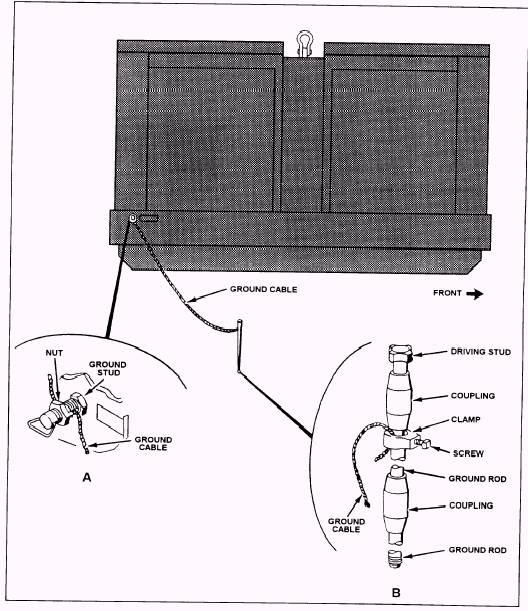
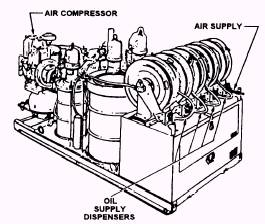
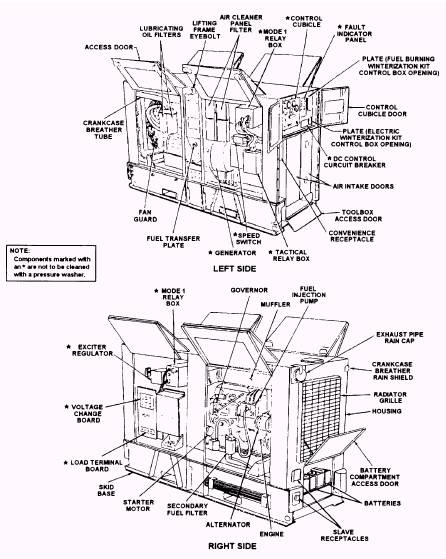
Figure 14-30.-Grounding procedure. NOTE: All components shown in figure 14-31 marked with an asterisk should NOT be pressure-washed because excessive water will cause moisture damage. The only method to clean these components is to wipe them down with clean rags. LUBRICATORS The most common lubricators, used in the NCF, are portable skid-mounted (fig. 14-32) or truck-mounted. When automotive and construction equipment is
being used on a project site some distance from the maintenance shop, the portable self-contained
lubricator can be used to save time and expense involved in moving the equipment long distances to be lubricated and serviced.
Figure 14-32.-Skid-mounted lubricator.
Figure 14-31.-Components of a generator. Uses To grease fittings, pull out the length of hose you need, wipe the fitting clean, and push the coupler of the control valve onto the fitting. Squeeze the valve lever. When grease is forced out, release the lever and twist the coupler to one side to remove it. Do not try to pull it straight off. After servicing is complete, wipe the control valve coupler clean, rewind the hose, and put the control valve into its holder. NOTE: When greasing, follow the manufacturer's lubrication chart to ensure all grease fittings are greased at the proper intervals. NOTE: Be careful not to overgrease, as overgreasing can cause damage to seals and packings. NOTE: Wipe up any excessive grease that can fall onto the deck of the equipment or onto components that do not require greasing. In dispensing motor or gear oil, pull out the necessary length of hose, clean all dirt off the fill hole plug and surrounding area, and then remove the plug. Check to see that the meter is on zero, insert the control valve nozzle into the fill hole, and squeeze the valve lever. After the required quantity of motor or gear oil has been dispensed, release the lever. Reinstall the plug you removed earlier. Clean the control valve nozzle, reset the meter to zero, turn counterclockwise, and store the hose and valve. For gauging and inflating tires, an air gauge with two sizes of air chucks is in the storage cabinet. The gauge has a pin fitting that snaps into the air hose coupler. When inflating tires, release the gauge lever to check the pressure of the tire; depress to inflate the tire. Safety l Always have a firm metal-to-metal contact when filling the fuel tank. l Never stand directly in front of a tire when it is being inflated. Stand to one side. l Always pipe the exhaust fumes to the outside when operating the lubricator in an enclosed area. . Never fill the fuel tank while the engine is running. . Never direct a jet of compressed air at yourself or anyone else. l Always stop all operations of a unit before servicing it. l Always use Navy-approved solvents for cleaning. l Always relieve all pressures before servicing any component of the lubricator. . Always check the engine and the compressor crankcase oil level at the start of each workday. . Always review the Material Safety Data Sheet (MSDS) for every hazardous material, fuel, lubricant, and solvent before use for precautions and hazards. . Always dispose of greases, oils, and contaminated materials in an environmentally responsible manner. |
 |
|
|
||