| Tweet |

Custom Search
|
|
 
|
||
|
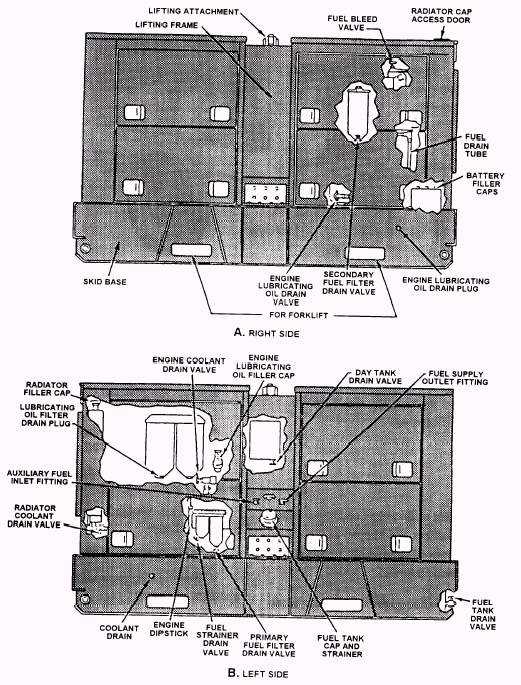
The generator (fig. 14-28) is a combination of an engine and an electric generator that converts mechanical energy into electrical energy. Most generators in the NCF range in size from 5 kilowatt (kW) to 200 kW. Generators in these sizes range in weight from 488 pounds to 10,500 pounds. They are mounted on skid bases, and lifting and tie-down eyes are provided. Operation The CEs normally make the selection of a generator, based on the electrical demands, the voltage phase, and
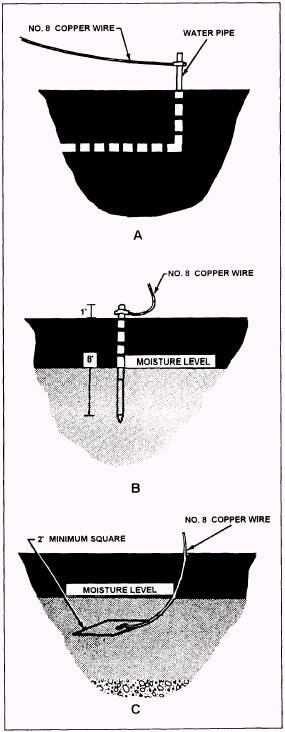
Figure 14-28.-Generator. the frequency requirements. When selecting a site to set up a generator, keep in mind that the noise level of the generator may present a problem in low-noise level or quiet areas. For example, the operating 100-kW generator presents a noise hazard that exceeds the allowable limits for unprotected personnel in the immediate area; therefore, all personnel in the immediate area must wear single- or double-hearing protection. Other factors to consider when selecting a site to set up a generator are as follows: 1. Placing a generator near points of large demand reduces the size of the wire required, holds the line loss (voltage) to a minimum, and provides adequate voltage control at the remote ends of the line. 2. The generator must be placed on a stable, preferably level, foundation. It should NOT be operated on an incline of more than 15 degrees from level. 3. In an area where the ground is soft, stabilize the foundation with wood planking, sand bags, or other materials to provide a firm foundation for the generator. Although generators are designed to be operated outdoors, prolonged exposure to wind, rain, and other adverse conditions will shorten their lives. When generators are to remain on site for any extended period of time, they should be mounted on solid-concrete foundations and installed under some type of shelter. Grounding The generator set must be connected to a suitable ground before operation. WARNING Electrical faults in the generator, load lines, or load equipment can cause injury or electrocution from contact with an ungrounded generator. Various types of grounding systems are used, such as an underground metallic water piping system (fig. 14-29, view A), a driven-metal rod (fig. 14-29, view B), or a buried metal plate (fig. 14-29, view C). A ground rod must have a minimum diameter of 5/8 inch if solid and 3/4 inch if pipe. The ground rod must be driven to a minimum depth of 8 feet. A ground plate must have a minimum area of 2 square feet and, where practical, be embedded below the permanent moisture level. NOTE: The ground rod is accountable collateral gear for a generator.
Figure 14-29.-Methods of grounding generators. The ground lead must be at least No. 8 AWG (American Wire Gauge) copper wire. The lead is bolted or clamped to the rod, plate, or piping system. The other end of the lead is connected to the generator set terminal stud, as shown in figure 14-30. |
 |
|
|
||