Custom Search
|
|
 
|
||
|
ENGINE
LUBE OIL ANALYSIS. Spectrometric oil analysis is another valuable tool which
can be used to determine the extent of accelerated wear in internal combustion
engines and other machinery which use closed lube oil or hydraulic oil systems.
By the use of spectrometric oil analysis, the accelerated wear in machinery can
be detected without disassembling the equipment long before there is any other
indication of immediate trouble. As a result of this type of analysis, skilled
maintenance personnel have been able to pinpoint wear areas early, and to take
corrective and preventive maintenance action during an emergency or on a
pre-planned basis as determined by the type of accelerated wear detected. By
replacing worn out minor parts a major failure can be prevented, and the
requirement for costly parts replacements of complete overhaul of the equipment
can be eliminated. Ships shall maintain accurate records of operating hours
since major overhauls, oil changes, and samplings in order to provide the
testing facility with the information requested in the sampling kit. (COMNAVSURFLANT uses the services of the Charleston Naval Shipyard and COMNAVSURFPAC
uses Intermediate Maintenance Activities (IMA) for analyzing oil samples from
machinery employing closed lube oil/hydraulic systems.) In addition, a record
of conditions found and repairs effected as a result of inspections conducted
following recommendations of the laboratory must also be maintained. When the shipyard or IMA laboratory receives the oil sample, a physical test and a spectrometric analysis are performed. The physical test consists of the following: 1. All samples are tested for fuel dilution, and a report is provided to all concerned by percent volume as per requirements of ASTM D92057. 2. All samples are tested for solids by centrifuge to show the amount of suspended particles separately from precipitated solids. The test must differentiate between those fine particles suspended by the active compounds in the oil and those that can settle out of the oil spontaneously to give a ratio of colloidal/precipitated solids. 3. Allowable use limits are tested and recorded. When the physical test is completed the shipyard/IMAs should make a spectrometric analysis of each used oil sample, then record and report to all concerned the concentrations of the
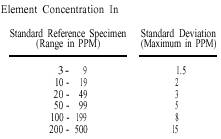
Figure 2-16.Element Concentrations. following elements in parts per million (ppm). (See figure 2-16.) Iron (Fe) Nickel (Ni) *Sodium (Na) Lead (Pb) Silver (Ag) Phosphorus (P) Copper (Cu) Tin (Sn) Zinc (Zn) Chromium (Cr) Silicon (Si) Calcium (Ca) Aluminum (Al) Boron (B) Barium (Ba) *Only when evidence of water is present. Testing will be done for all the above elements. The sensitivity and reliability of the equipment used for the test will be such that the standard deviation obtained in the analysis for each specified element must not exceed the appropriate value shown in figure 2-16. Additional information on trend analysis and oil spectrometric analysis is contained in COM-NAVSURFLANTINST 9000.1 or COMNAV-SURFPACINST 4700.1A. |
 |
|
|
||