Custom Search
|
|
 
|
||
|
VIEW ANALYSIS. You must
be able to analyze a multi-view
projection or, in other words, to
determine what each line in a particular view represents.
In this connection, it is helpful to remember
that in a third-angle projection, the plane
of projection is always presumed to be between
the object and the observer, regardless
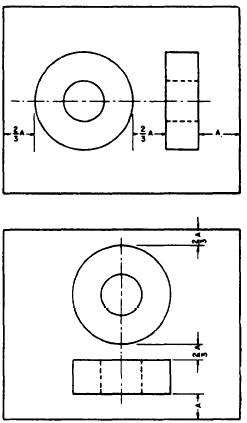
Figure 5-16.-Spacing of views of a circular object,
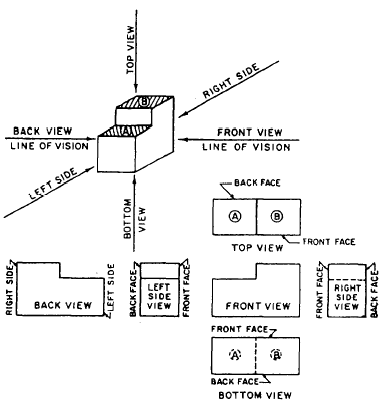
Figure 5-17.-Multi-view analysis of a third-angle orthographic projection.
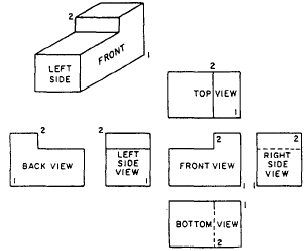
Figure 5-18.-Procedure for numbering hidden and visible corner points.of which view you are considering. This means that, in a third-angle projection, each view of a surface of an object is a view of that surface as it would appear to an observer looking directly at it.Figure 5-17 shows a six-view multi-view third-angle projection of the block shown in a single-view projection in the upper left corner of the figure. You should not have any trouble analyzing the front view; you know that the top is up, the bottom is down, the left side is to the left, and the right side is to the right. |
 |
|
|
||