Custom Search
|
|
  |
|||||||||||||||
|
Plastics
Plastic is one of the more commonly used types of insulating material for electrical conductors. It has good insulating, flexibility, and moisture-resistant qualities. Although there are many types of plastic insulating materials, thermoplastic is one of the most common. With the use of thermoplastic, the conductor temperature can be higher than with some other types of insulating materials without damage to the insulating quality of the material. Plastic insulation is normally used for low- or medium-range voltage. The designators used with thermoplastics are much like those used with rubber insulators. The following letters are used when dealing with NEC type designators for thermoplastics:
For example, a NEC designator of Type THWN would indicate thermoplastic heat- and moisture-resistant with an outer nylon jacket.
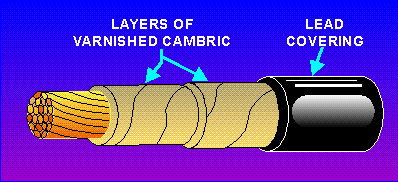
Varnished Cambric Varnished cambric insulation can withstand much higher temperatures than rubber insulation. Varnished cambric is cotton cloth that has been coated with an insulating varnish. Figure 1-8 shows a cable covered with varnished cambric insulation. The varnished cambric is in tape form and is wound around the conductor in layers. An oily compound is applied between each layer of the tape to prevent water from seeping through the insulation. It also acts as a lubricant between the layers of tape, so they will slide over each other when the cable is bent. Figure 1-8. - Varnished cambric insulation.
Cambric insulation is used on extremely high-voltage conductors used in substations and powerhouses. It is also used in other locations subjected to high temperatures. In addition, it is used on the coils and leads of high-voltage generators. Transformer leads also use this insulation because it is unaffected by oils or grease and has high dielectric strength. Varnished cambric and paper insulation for cables are the two types of insulating materials most widely used at voltages above 15,000 volts. Such cable is always lead covered to keep out moisture. Extruded Polytetrafluoroethylene Extruded polytetrafluoroethylene is a high-temperature insulation used extensively in aircraft and equipment installations. It will not burn, but will vaporize when subjected to intense heat. Conductors for high temperatures use a nickel coating rather than tin or silver to prevent oxidation. Nickel-coated wire is more difficult to solder, but makes satisfactory connections with proper soldering techniques. Avoid breathing the vapors from extruded polytetrafluoroethylene insulation when it is heated. Symptoms of overexposure are dizziness or headaches. These symptoms disappear upon exposure to fresh air. Q.24 What safety precaution should you take when working with extruded
polytetrafluoroethylene insulated wiring? |
|||||||||||||||