Custom Search
|
|
 
|
||
|
CLOSING A TRAVERSE. You
close or
balance a
traverse by distributing the linear error of closure (one within
the allowable maximum, of course) over the traverse. There are several methods
of doing this, but the one most generally applied is based on the so-called
compass rule. By this
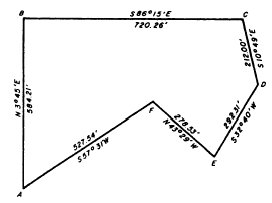
rule you adjust the latitude and departure of each traverse line as follows: 1. Correction in latitude equals the linear error of closure in latitude times the length of the traverse line divided by the total length of traverse.2. Correction in departure equals the linear error of closure in departure times the length of the traverse line divided by the total length of traverse.Figure 7-12 shows a closed traverse with bearings and distances notes. Figure 7-13 shows the computation of the latitudes and departures for this traverse entered on the type of form that is commonly used for this purpose. As you can see, the error in latitude is +0.33 foot, and the error in departure is +2.24 feet. The linear error of closure, then, is The total length of the traverse is 2614.85 feet; therefore, the ratio of error of closure is 2.26:2614.85, or about 1:1157. We will assume that this ratio is within the allowable maximum. Proceed now to adjust the latitudes and departures by the compass rule. Set down the latitudes and departures on a form like the one shown in figure 7-14 with the error of closure in latitude at the foot of the latitudes column and the error of closure in departure at the foot of the departures column.
Figure 7-12.Closed traverse by bearings and distances.
Figure 7-13.Form for computing latitudes and departures.
Figure 7-14.Form for adjusting latitudes and departures. Next, you use the compass rule to determine the latitude correction and departure correction for each line. For All, the latitude correction equals
The error of closure in latitude is plus; therefore, the correction is minus. Note that the sum of the applied latitude corrections equals the error of closure in latitude and the sum of the applied departure corrections equals the error of closure
Figure 7-15.Sample pages from traverse table. in departure. The corrections, however, are opposite in sign to the error of closure. |
 |
|
|
||