Custom Search
|
|
 
|
||
|
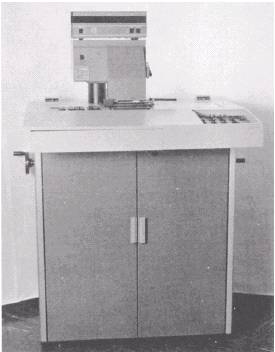
The roll paper printer is very popular on larger ships and shore stations that produce a large volume of color prints. The advantages of roll paper printers are they are operated under normal room lighting conditions, and they are very useful when a large number of the same size prints are needed from a single negative. When these printers are used, the correct density and color is accomplished by making test prints. Once the corrections and number of prints required are keyed into the printer, the printer makes each exposure and advances the paper automatically. When the printing is completed, the exposed roll of paper is removed and processed. After processing, the prints are then cut from the roll with a paper cutter. Roll paper printers have built-in analyzers. These analyzers are calibrated using standard negatives. When a production negative is printed, the machine refers to the memory and produces a print using the information stored from the standard negative. Generally, that produces a print that closely represents the original
PH1 Slaughenhaupt Figure 12-7A. Front view of Pako BC 24 roll paper printer. scene; however, test prints are still made to produce the highest quality prints possible. The most popular roll paper printer used in Navy imaging facilities is the Pako BC 24 (fig. 12-7A and fig. 12-7B). |
 |
|
|
||