Custom Search
|
|
 
|
||
|
As with the other types of architectural photography-buildings or facilities-inspection and survey pictures play an important role in the Navy. The Naval Investigative Service (NIS) may need pictures of a building to point out weaknesses in physical security. The fire department uses pictures of the station theater to train the fire fighters in evacuation measures. And the safety officer certainly needs good pictures to show the extent of damage or existing hazardous conditions to buildings or personnel. Exterior Photography Buildings must be photographed pretty much as they exist. With portraits, for example, you can ask the sitter to smile and pose, and with still life you can alter the arrangement. You cannot do either of these with a building. The main controls you have over the picture are the viewpoint and the lighting. For exterior architectural pictures, the position of the sun in relation to the subject is a very important consideration. Which sides of the building are lighted and at what time of day? Where are the shadows cast? Architecture is dead without light. Like the sculptor, the architect shapes forms in relation to lighting. The lighting at a site is often studied long before the first plans take shape on the drawing board. The lighting becomes a deciding factor in determining the character of a building, the choice of materials, and the location of the building. The nature and direction of the light are the two main components of our concept of lighting. Normal lighting is often preferable for perfect reproduction of materials; that is, light from a slightly overcast sky. This diffused light reduces contrast in the texture of the material just enough to create a good balance between the highlights and shadows. A building as a whole is often depicted better in direct, angled sunlight from a cloudless sky. Filters are used to control the contrast between subject and sky. Direct sunlight often produces contrasty pictures with simplified lines that may sometimes be preferable as an illustrative effect. The light in cloudy weather is the worst kind of lighting for architectural photography. Try to avoid making pictures of a building in cloudy weather. The direction of the light on sunny or slightly overcast days governs the form of the building and the ability of the photograph to bring out its characteristic features. Since the position of the sun in relation to the building constantly changes, there is only one way to determine the best lighting-study the building at different times of the day. Only then is it really possible to identify the best lighting for the building. Moreover, you should be prepared to study the lighting from different angles. Do not be content with your first camera angle. You should always check to see whether there is a better angle. A building should be depicted so the viewer experiences its volume and materials. This is often impossible, except with side lighting. The greater the angle of the light, the greater its ability to produce a forceful re-creation of materials and shapes (fig. 6-21). Also to be considered are the surroundings. Is there construction going on in the background? Is there a distracting landscape or unrelated building that must be concealed? What is the best camera position for making this particular picture ? Can I get far enough away to present an undistorted image? Should I have a ladder to stand on or can I make this picture from on top of another building or must I arrange with public works for a bucket truck? What number of viewpoints are required? What focal-length lens is best for each view? Viewpoint The greatest difficulties in photographing buildings is converging verticals. When you hold the camera so it is pointing horizontally, you often find there is too much uninteresting foreground included in the picture, and you may be chopping the top of the building off. So, tip the camera back to eliminate most of that foreground and get the top of the building back into the picture. Now, look what has happened-the vertical lines are converging; they are no longer parallel; they are sloping in at the top of the picture. The picture is distorted. A good architectural photographer does not produce such a picture. Instead, he uses a view camera and does it properly. Interior Photography Photographs of interiors can be grouped under three headings: Public interiors of all kinds, such as assembly halls, places of worship, libraries, galleries, auditoriums, and theaters Residential interiors, both large and small
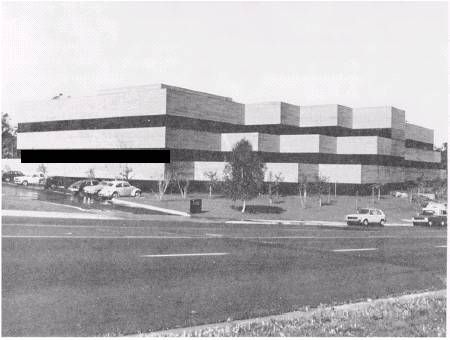
PHAN Wright 302.141 Figure 6-21. Exterior architectural photograph shot with 45-degree lighting. Details of interiors, mainly close-ups of adornments, technical features, interior decorations, and so forth. Photographs of public interiors are often characterized by size, dominance, scale, and measurements. You must be careful of fluorescent lights when shooting color film. They can produce color casts. If the fluorescent tubes are all of the same type, the color cast can be corrected with filters. Fluorescent lighting is, however, often excellent for black-and-white photography. In interior photography of public buildings, an attempt may be made to shoot from a somewhat higher camera angle than eye level to provide an overview of the scene. It is important not to have the first detail in the subject too far from the lower edge of the picture. The interior should glide into the image frame in a natural way. Maximum depth of field is the only acceptable technique here. Another important problem in public and residential interiors is the balance between natural outdoor light and indoor artificial light. When lighting is mixed this way, it is better to delay shooting until the daylight is too weak to overwhelm the interior lighting. Using the light of the midday sun is definitely wrong. It is also wrong to photograph interiors so late in the day that the sky seen through windows is completely black So a time near sunset or, if you wish to avoid visitors, the early morning hours is recommended, especially for color photography. Measurement of the ambient interior illumination and the outdoor light gives you a good idea of the best time to take pictures. Lenses with built-in leaf shutters are major assets in interior photography when some daylight is present, because they synchronize with electronic flash at all speeds. The choice of a suitable shutter speed allows you to obtain balance between daylight and flash illumination. |
 |
|
|
||