Custom Search
|
|
 
|
||
|
Density and Voids Determination Density of the specimens should be determined by weighing in air and in water. A direct weight in water of open-textured or porous specimens will give erroneous results because of absorption of water, and other means must be used to determine the volume of the specimen. One means of measuring the volume of a porous specimen is to coat the specimen with paraffin to seal . all the voids and then weigh the coated specimen in air and in water. A correction is made for the weight and volume of the paraffin. The difference between these two weights, in grams, gives the volume of the specimen in cubic centimeters. You can then determine the unit weight (density) of the mix in pounds per cubic foot for each specimen by multiplying the specific gravity of the specimen by 62.4 pounds (weight of 1 cubic foot of water). Before carrying out the calculations for percent of voids, you must know the specific gravity of the aggregate blend and the asphalt content used.Stability and Flow Determination A full discussion of the method used to test for stability and flow can be found in NAVFAC MO-330;
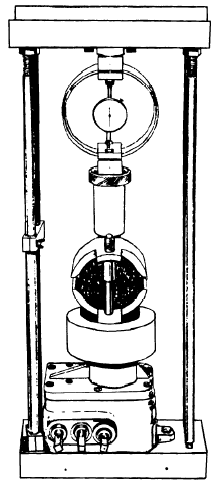
Figure 13-37.-Marshall stability testing head mounted in CBR jack.however, well briefly discuss the method here. The apparatus used for testing stability and flow of the specimen is shown in figure 13-37. This figure shows a Marshall stability testing head containing the specimen, mounted on the plunger of a bearing-ratio jack. This test head consists of upper and lower breaking heads. A 5,000-pound proving ring with a dial is installed in the jack.The test for stability is made by applying pressure gradually, about 2 inches per minute, and reading the maximum pressure the specimen sustains before failing.The test for flow is carried out simultaneously by holding a flow meter over the testing head guide rod (vertical rod shown running through the testing heads) and reading the meter at the instant the specimen fails under pressure. This reading indicates the flow value of the specimen in inches to the nearest 0.01 inch. |
 |
|
|
||