Custom Search
|
|
 
|
||
|
MAINTENANCE Before starting each operation (experiment, test, etc.) the exposed portions of the grounding system should be visually checked for any damage and to determine that all necessary connections have been made. If more than one operation is conducted every day, then visual checks should be performed only at the beginning of each shift, if the grounding system will be needed during that shift. The adequacy of the grounding system should be verified annually. It is recommended that the grounding impedance within the equipment be maintained at 0.25 ohms or less. (See IEEE 1100). 10.9.2.2 MATERIALS USED IN AN UNCONVENTIONAL MANNER The practice of using materials or components for purposes other than originally designed needs special safety considerations in use, identification, personnel protection, and equipment protection.
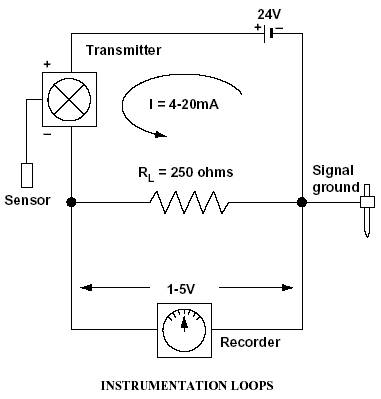
Figure 10-8. Typical Process Instrument Loop. 10.9.2.2.1 HAZARDS The use of materials for something other than their original design criteria has the potential for providing an additional hazard, especially to personnel unfamiliar with the research apparatus. Personnel may assume that the material is used as originally designed and can unknowingly expose themselves to hazards unless special precautions are followed. Some examples of items used in an unconventional manner are: 1. Copper pipe used as an electrical conductor 2. Insulated flexible copper pipe used as an electrical conductor 3. Specially designed high-voltage or high-current connectors 4. Specially designed high-voltage or high-current switches 5. Water column used as a high-voltage resistor 6. Standard coax cable used in special high-voltage pulsed circuits
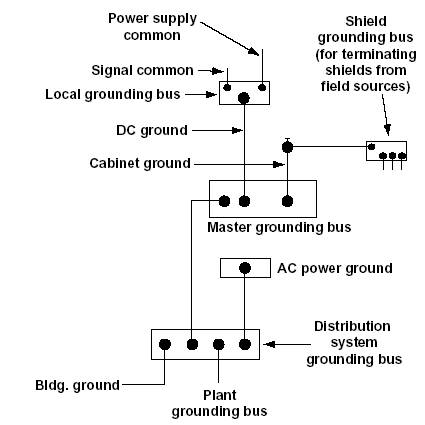
Figure 10-9. Typical control instrumentation ground system. 7. Water column used as a charged-particle beam attenuator 8. Commercial cable tray used as a mechanical support for experimental apparatus.
|
 |
|
|
||