Custom Search
|
|
 
|
||
|
ORTHOPEDIC INJURIES Many kinds of accidents cause injuries to bones, joints, or muscles. In giving first aid or emergency treatment to an injured person, you must always look for signs of fractures (broken bones), dislocations, sprains, strains, and contusions. An essential part of the emergency treatment for fractures consists of immobilizing the injured part with splints so that the sharp ends of broken bones will not move around and cause further damage to nerves, blood vessels, or vital organs. Splints are also used to immobilize severely injured joints or muscles and to prevent the enlargement of extensive wounds. You must have a general understanding of the use of splints before going on to learn the detailed first aid treatment for injuries to bones, joints, and muscles. SPLINTS In an emergency, almost any firm object or material will serve as a splint. Thus, umbrellas, canes, rifles, tent pegs, sticks, oars, wire mesh, boards, corrugated cardboard, and folded newspapers can be used as splints. A fractured leg may sometimes be splinted by fastening it securely to the uninjured leg. Whenever available, use manufactured splints such as pneumatic splints or traction splints. Requirements
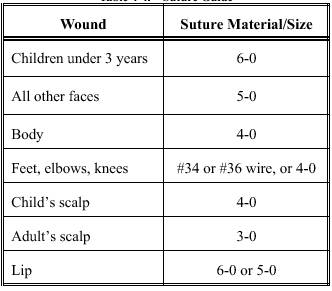
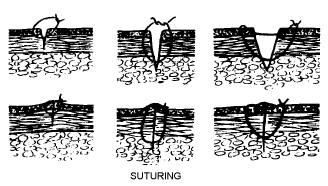
Table 4-4.-Suture Guide Figure 4-33.-Suturing. Application |
 |
|
|
||