Custom Search
|
|
 
|
||
|
JOINTS
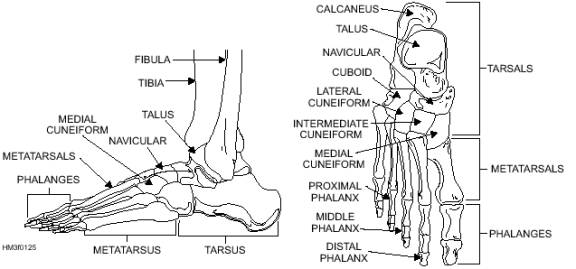
LEARNING OBJECTIVE: Recognize joint classifications and identify joint movements for the key joints in the body. Wherever two or more bones meet, a joint is formed. A joint binds various parts of the skeletal system together and enables body parts to move in response to skeletal muscle contractions. JOINT CLASSIFICATIONS Immovable. Bones of the skull are an example of an immovable joint. Immovable joints are characterized by the bones being in close contact with each other and little or no movement occurring between the bones. Slightly movable. In slightly movable joints, the bones are held together by broad flattened disks of cartilage and ligaments (e.g., vertebrae and symphysis pubis). Figure 1-25.-The foot: A. Lateral view of foot; B. Right foot viewed from
above. |
 |
|
|
||