Custom Search
|
|
  |
|
|
FLUX
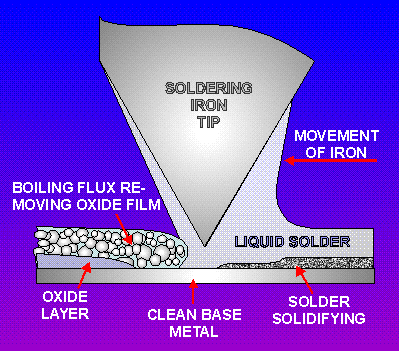
As you know, flux is a cleaning agent to remove oxidation during soldering. Heating a metal causes rapid oxidation. Oxidation prevents solder from reacting chemically with a metal. Flux cleans the metal by removing the oxide layer. This operation is shown in figure 2-36. As the iron is moved in the direction shown, the boiling flux floats away the oxide film. The molten solder following the iron then fuses rapidly with the clean surface of the metal. Figure 2-36. - Action of flux.
There are two classes of flux: corrosive and noncorrosive. Zinc chloride, hydrochloric acid, and sal ammoniac are corrosive fluxes. Corrosive flux should NEVER be used in electrical or electronic repair work. Use only rosin fluxes. Any flux remaining in the joint corrodes the connection and creates a defective circuit. Rosin is a noncorrosive flux and is available in paste, liquid, or powder form. SOLVENTS A solvent is used for cleaning and removing contaminants (oil, grease, dirt, and so forth) from the soldered connection. Solvents must be nonconductive and noncorrosive. Solvents must be used in a manner that keeps dissolved flux residue from "contact" surfaces, such as those in switches, potentiometers, or connectors. Ethyl and isopropyl alcohol are acceptable solvents. These cleaning solvents are highly flammable and may give off toxic vapors. Follow Navy safety precautions and take extreme care when using any flammable solvent. Q.40 What purpose does flux serve in the soldering process?
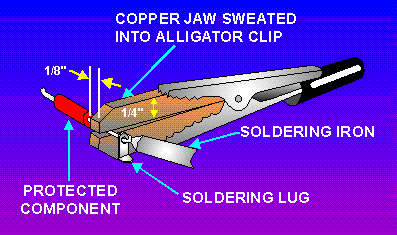
Soldering Aids Some type of heat shunt must be used in all soldering operations that involve heat-sensitive components. A typical heat shunt (figure 2-37) permits soldering the leads of component parts without overheating the part itself. The heat shunt should be attached carefully to prevent damage to the leads, terminals, or component parts. The shunt should be clipped to the lead, between the joint and the part being protected. As the joint is heated, the shunt absorbs the excess heat before it can reach the part and cause damage. Figure 2-37. - Heat shunt.
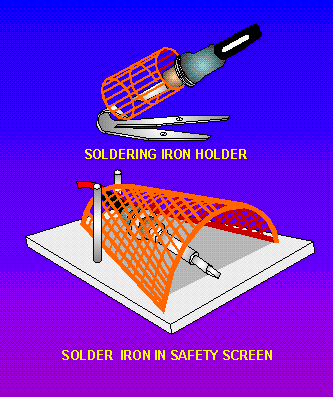
A small piece of beeswax may be placed between the protected unit and the heat shunt. When the beeswax begins to melt, the temperature limit has been reached. The heat source should be removed immediately, but the shunt should be left in place. Removing the shunt too soon permits the heat to flow from the melted solder into the component. The shunt should be allowed to remain in place until it cools to room temperature. A clip-on shunt is preferred because it requires positive action for removal. It does not require that the technician maintain pressure to hold it in place. This leaves both hands free to solder the connection. Two safety devices are shown in figure 2-38. These devices prevent burns to the operator when the soldering iron is not in use for short periods of time. Figure 2-38. - Soldering iron safety devices.
Q.43 What is the purpose of a heat shunt? |
|
|
|
Integrated Publishing, Inc. - A (SDVOSB) Service Disabled Veteran Owned Small Business
|