Custom Search
|
|
  |
|
|
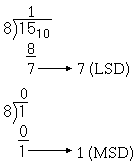
Decimal to Octal The conversion of a decimal number to its base 8 equivalent is done by the repeated division method. You simply divide the base 10 number by 8 and extract the remainders. The first remainder will be the LSD, and the last remainder will be the MSD. Look at the following example. To convert 1510 to octal, set up the problem for division:
Since 8 goes into 15 one time with a 7 remainder, 7 then is the LSD. Next divide 8 into the quotient (1). The result is a 0 quotient with a 1 remainder. The 1 is the MSD:
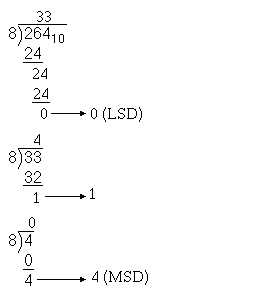
Now write out the number from MSD to LSD as shown: 178 The same process is used regardless of the size of the decimal number. Naturally, more divisions are needed for larger numbers, as in the following example: Convert 26410 to octal:
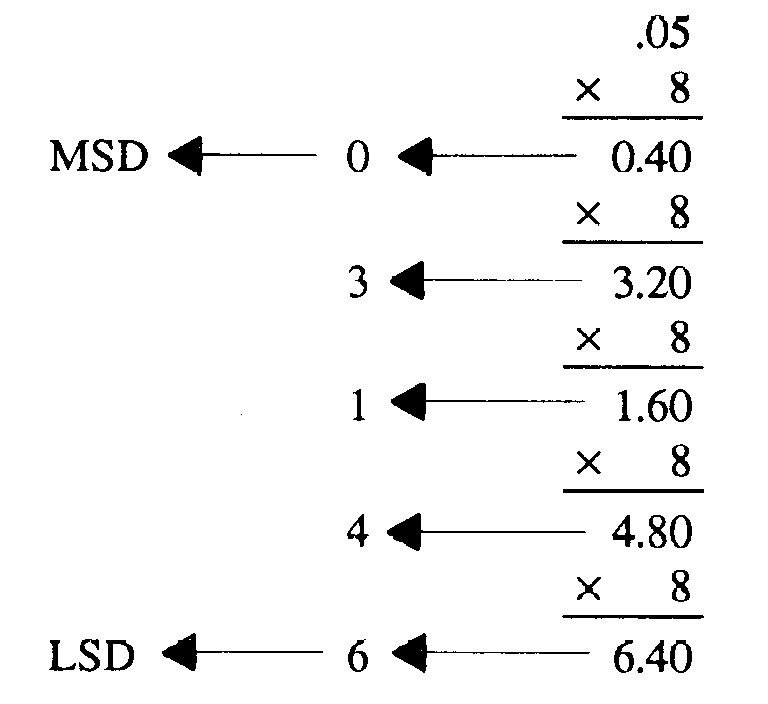
By rewriting the solution, you find that the octal equivalent of 26410 is as follows: 4108 To convert a decimal fraction to octal, multiply the fraction by 8. Extract everything that appears to the left of the radix point. The first number extracted will be the MSD and will follow the radix point. The last number extracted will be the LSD. Convert 0.0510 to octal:
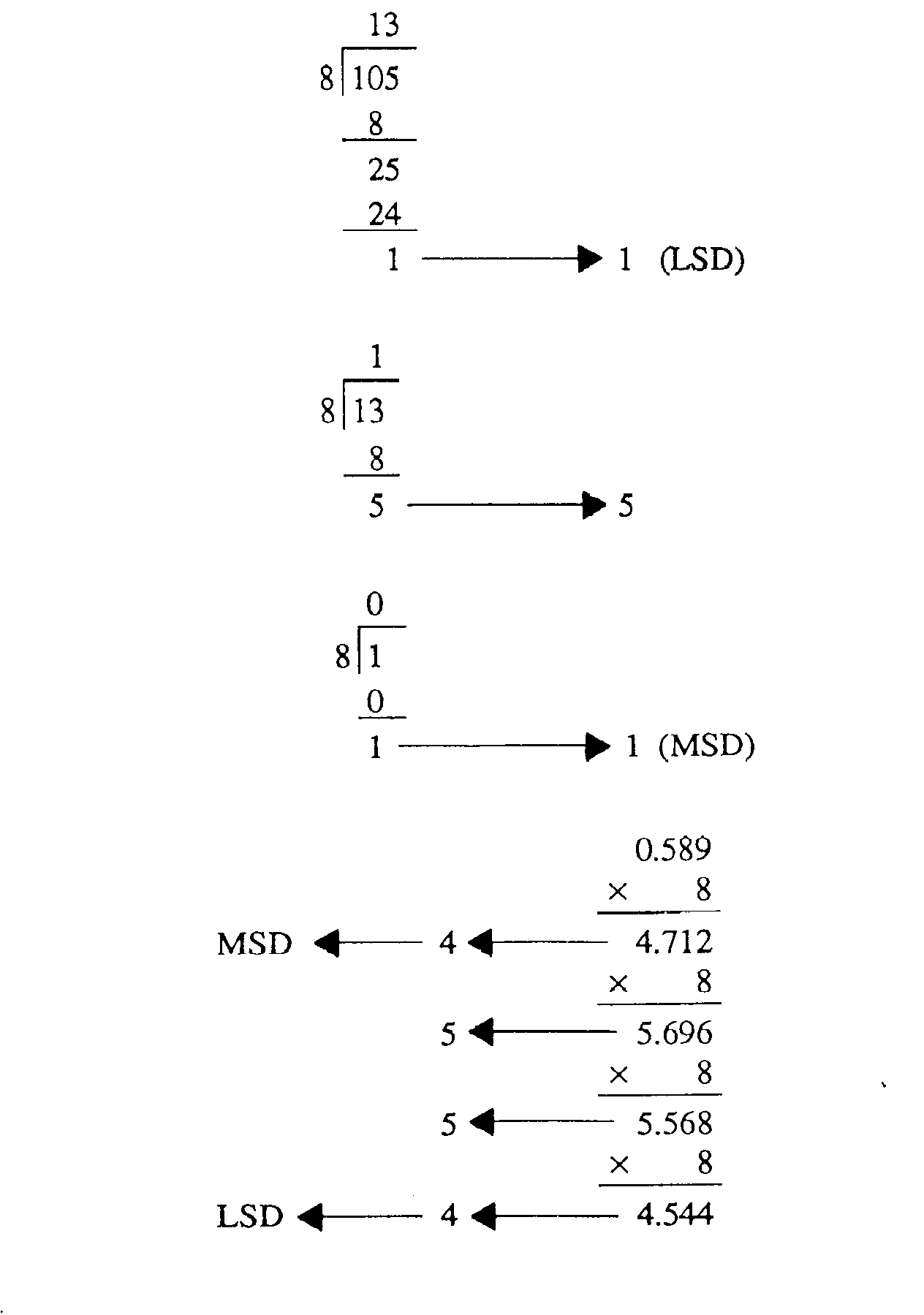
Write the solution from MSD to LSD: .031468 You can carry the conversion out to as many places as needed, but usually four or five places are enough. To convert a mixed decimal number to its octal equivalent, split the number into whole and fractional portions and solve as shown below: Convert 105.58910 to octal:
Combine the portions into a mixed number: 151.45548 Convert the following decimal numbers to octal: Q.54 710. |
 |