CHAPTER 13
Secondary Chords
Secondary chords relate to the key of the chord which follows (key of the moment) but do not effect a modulation. For example, the secondary chords to the supersonic chord in C major come from the key of d minor. A secondary chord contains at least one chromatically altered note; the chromatically altered note is never doubled. Secondary chords usually have dominant function, Chords must be major or minor in quality to be preceded by secondary chords. ANALYSIS
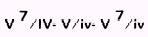
Two Roman numerals separated by a slash are used to analyze secondary chords. The first numeral shows the function and quality of the secondary chord in relation to the following chord; the second numeral shows the following chord.
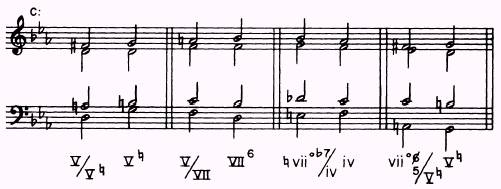 FIGURE 13.1. Analysis of Secondary Chords
SECONDARY DOMINANTS
Secondary dominants may be triads, dominant sevenths, or dominant sevenths with extensions (elevenths are rare). When a secondary dominant progresses to a diatonic seventh chord, the momentary leading tone (third of the chord) may descend by a half step to become the seventh.
 The
 or occurs in major or minor as a chromatically altered supersonic chord. It is used in any position in major. In minor it is used in any position except second inversion. or occurs in major or minor as a chromatically altered supersonic chord. It is used in any position in major. In minor it is used in any position except second inversion.
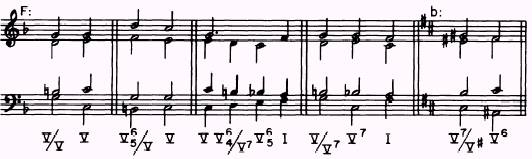
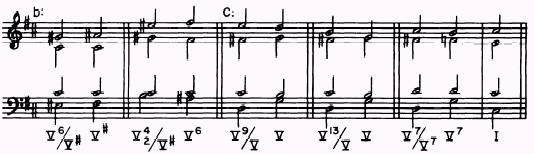 FIGURE 13.2. Secondary Dominants of the Dominant
Because
 the is the tonic chord, the
 must be used in major to have a chromatic alteration in the tonic chord. In minor, the secondary dominant triad or dominant seventh may be used because both are altered tonic chords. These secondary dominants may be used in all positions. must be used in major to have a chromatic alteration in the tonic chord. In minor, the secondary dominant triad or dominant seventh may be used because both are altered tonic chords. These secondary dominants may be used in all positions.
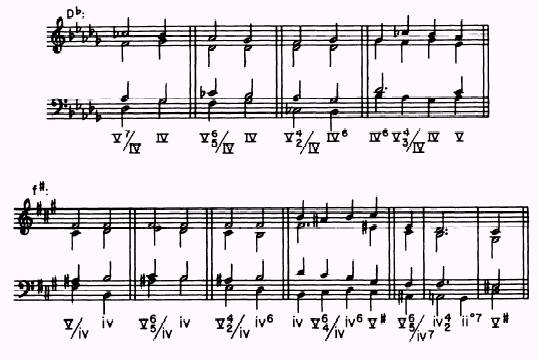 FIGURE 13.3. Secondary Dominants of the Subdominant
 The
 occurs in major as a chromatically altered submediant chord. It is used
in all positions second inversion. except occurs in major as a chromatically altered submediant chord. It is used
in all positions second inversion. except
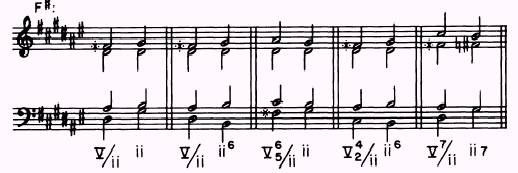 FIGURE 13.4. Secondary Dominants of the Supersonic
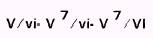
The
 occurs in major as a chromatically altered mediant chord. It is used in all positions except second inversion. In minor, the secondary dominant seventh must be used so that a chromatic alteration occurs on the mediant chord is usable in all positions; second inversion occurs only in a descending line because it involves the subtonic scale degree. occurs in major as a chromatically altered mediant chord. It is used in all positions except second inversion. In minor, the secondary dominant seventh must be used so that a chromatic alteration occurs on the mediant chord is usable in all positions; second inversion occurs only in a descending line because it involves the subtonic scale degree.
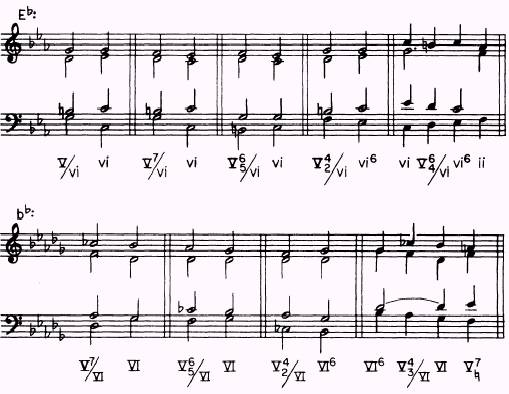 FIGURE 13.5. Secondary Dominants of the Submediant
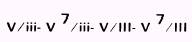
The V/ iii occurs in major as a chromatically altered leading tone chord and is used in all positions except second inversion. In a minor key the V/III and V7 are the subtonic triad and subtonic seventh chord. Although no alteration occurs, these chords could be analyzed as secondary dominants.
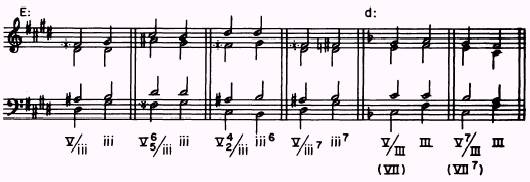 FIGURE 13.6. Secondary Dominants of the Mediant
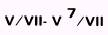
 occurs in minor as a chromatically altered subdominant chord. It is used in all positions except second inversion. occurs in minor as a chromatically altered subdominant chord. It is used in all positions except second inversion.
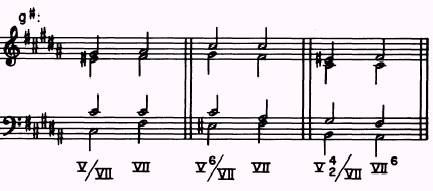 FIGURE 13.7. Secondary Dominants of the Subtonic
|