Custom Search
|
|
 
|
||
|
SEAT, BOTTOM, OR HEEL CUTThe cut made
at the end of the rafter that is to rest on the
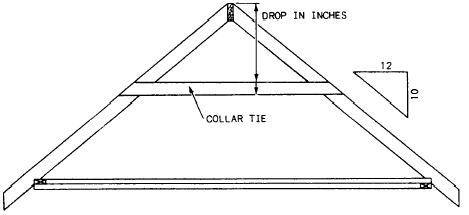
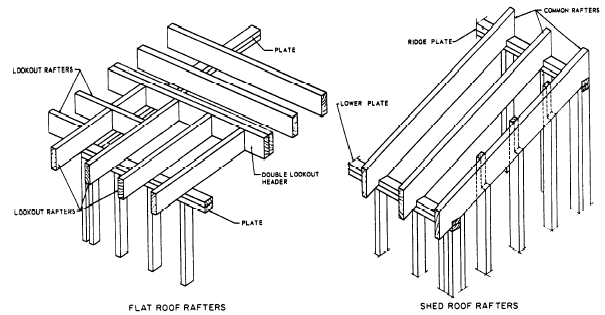
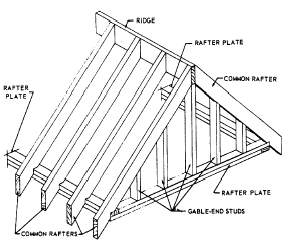
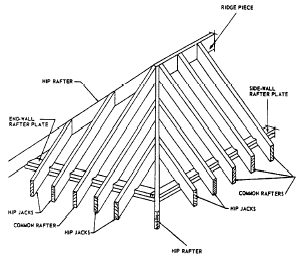
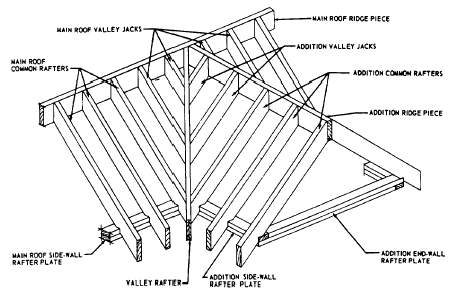
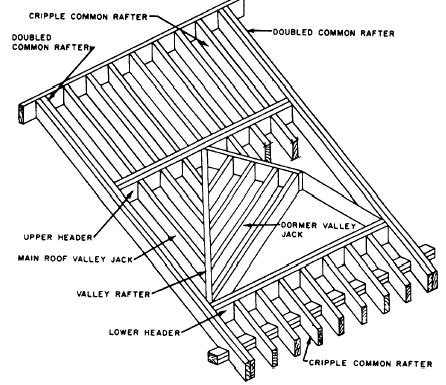
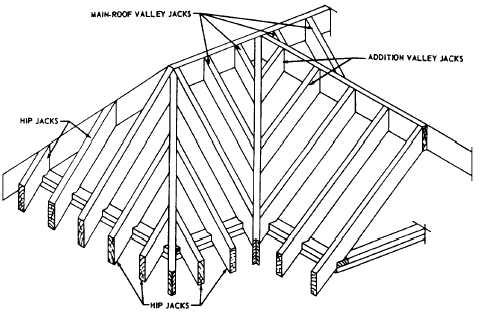
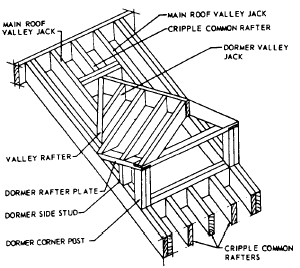
plate. SIDE, OR CHEEK, CUTA bevel cut on the side of a rafter to fit against another frame member.EAVE OR TAILThe portion of the rafter extending beyond the outer edge of the plate. Figure 6-26 shows additional terms used in connection with rafter layout.RAFTER LENGTH is the shortest distance between the outer edge of the plate and the center of the ridgeline.MEASURE LINE is an imaginary reference line laid out down the middle face of the rafter.PLUMB LINE is any line that is vertical when the rafter is in its proper position.LEVEL LINE is any line that is horizontal when the rafter is in its proper position.A rafter with a projection often has a notch in it called a BIRD S-MOUTH (fig. 6-27). The plumb cut of the birds-mouth that bears against the side of the rafter plate is called the HEEL CUT, whereas the SEAT CUT bears on top of the birds-mouth. COLLAR TIES (fig. 6-28) are horizontal members used as reinforcement in gable or double-pitch roof rafters. In a finished attic, these ties may function as ceiling joists.When the rafters are placed farther apart, horizontal members called PURLINS are placedacross them to serve as the nailing or connecting members for the roofing. Purlins are generally used with standard metal roofing sheets, such as galvanized iron or aluminum sheets. Several methods of roof framing and types of rafter arrangement are further shown in figures 6-29 through 6-36.
Figure 6-28.-Layout of a collar tie.
Figure 6-29.Flat and shed roof framings.
Figure 6-30.Gable roof framing.
Figure 6-31.Equal-pitch roof
Figure 6-32.-Addition roof framing.
Figure 6-33.-Framing of gable dormer without sidewalls.
Figure 6-34.-Types of jack rafters.
Figure 6-35.-Framing of gable dormer with sidewalls. |
||
|
||