Custom Search
|
|
 
|
||
|
Construction Lines When you are sketching an object, such as that shown in figure 5-67, dont start at one corner and draw it detail by detail and expect it come out with the various elements in correct proportion. It is better to block in the overall size of the object first, (See fig. 5-67, view A.) Then draw light guidelines at the correct angles for the various outlines of the object. (See fig. 5-67, views B and C.)Finish the sketch by first making an outline of the object and then drawing in the details, as shown in figure 5-67, view D.Order of Sketching To make a working sketch, first choose a clean sheet of paper, either plain or ruled. Estimate the size the sketch should be, and select the views that will give the best picture of the object. Then draw the ORTHOGRAPHIC PROJECTIONS of these views, leaving adequate space between them for
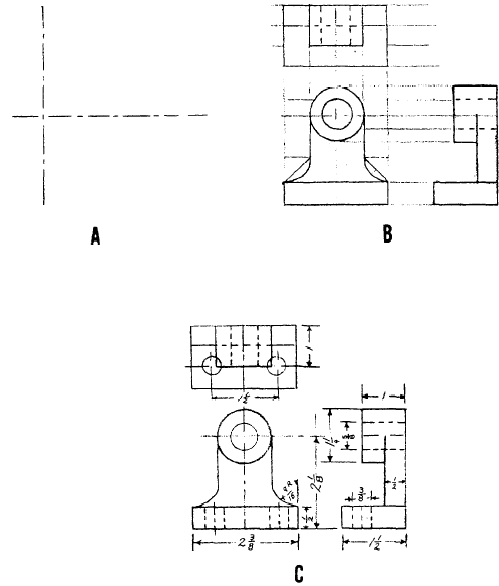
Figure 5-67.-The use of construction lines in sketching an object.
Figure 5-68.-Progress of a working sketch. dimensions. (Refer to the working sketch in fig. 5-68.) In sketching, progress as follows:1. Draw the center lines, as shown in figure 5-68, view A. 2. Block in the views. 3. Draw the outlines, aligning them as in figure 5-68, view B. 4. Add the details on the surface of the views. 5. Darken the lines of the finished sketch. 6. Use an art gum or a kneaded eraser to erase the construction lines, which are no longer needed. If necessary, touch up the lines you may have inadvertently erased. 7. Draw all necessary extension and dimension lines. 8. Letter in the dimensions. (See fig. 5-68, view C.)You can see that a working sketch such as the one shown in figure 5-68 could easily be followedin preparing a finished drawing of the object. The sketch provides you with all the necessary information needed on the finished drawing. |
||
|
||