Custom Search
|
|
 
|
||
|
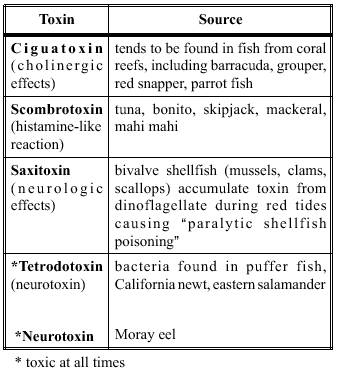
INHALATION POISONS In the Navy, and in other industrial settings in general, inhalation is the most common route of exposure to toxic substances. The irritants and corrosives mentioned in tables 5-2 and 5-3 are more often a source of poisoning by means of inhalation rather than by ingestion. An inhaled poison can act directly on the upper respiratory tract or lungs with immediate, delayed, or chronic effects, or the substance can use the pulmonary system to gain entry into the body, be absorbed into the blood, and cause toxic effects (systemic toxicity) at a distant site of action. The handling of large quantities of petroleum products (fuel oil and gasoline, in particular) constitutes a special hazard, since all of these products give off hazardous vapors. Other poisonous gases are by-products of certain operations or processes: exhaust fumes from internal combustion engines; fumes or vapors from materials used in casting, molding, welding, or plating; gases associated with bacterial decomposition in closed spaces; and gases that accumulate in voids, double bottoms, empty fuel tends to be found in fish from coral reefs, including barracuda, grouper, red snapper, parrot fish tuna, bonito, skipjack, mackeral, mahi mahi
Table 5-4.-Examples of Toxins from Fish Known to be
NOTE: Inhaled substances can cause olfactory fatigue. After a few minutes of exposure, the smell is no longer detected, fooling the individual into believing the substance is no longer there and, thus, no longer a danger. Carbon monoxide is the most common agent of gas poisoning. It is present in exhaust gases of internal combustion engines as well as in sewer gas, lanterns, charcoal grills, and in manufactured gas used for heating and cooking. It gives no warning of its presence since it is completely odorless and tasteless. style="mso-spacerun: yes"> The victim may lose consciousness and suffer respiratory distress with no warning other than slight dizziness, weakness, and headache. The lips and skin of a victim of carbon monoxide poisoning are characteristically cherry red. Death may occur within a few minutes. Most inhalation poisoning causes shortness of breath and coughing. The victim's skin will turn blue. If the respiratory problems are not corrected, cardiac arrest may follow. Inhaling fine metal fumes can cause a special type of acute or delayed poisoning. These metal fumes are generated from heating metal to boiling and evaporation during hot metal work in such operations as metal cutting or welding. The resulting illness is called metal fume fever (MFF). In the Navy, the most common cause of MFF is the inhalation of vaporized zinc found in the galvanized covering of iron/steel. Proper local and general ventilation and/or the use of respiratory protection are necessary to prevent this illness. The first stage of treatment for an inhalation poisoning is to remove the victim from the toxic atmosphere immediately. WARNING: Never try to remove a victim from the toxic environment if you do not have the proper protective mask or breathing apparatus, or if you are not trained in its use. Too often, well-intentioned rescuers become victims. If help is not immediately available, and if you know you can reach and rescue the victim, take a deep breath, hold it, enter the area, and pull the victim out. Next, 1. start basic life support (the ABC+D&Es); 3. keep the victim quiet, treat for shock, and administer oxygen; and 4. transport the victim to a medical treatment facility for further treatment. |
||
|
||