Custom Search
|
|
  |
|
|
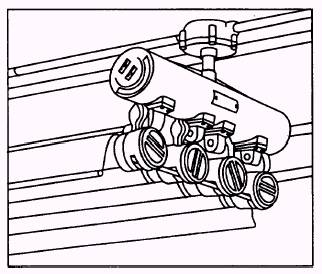
Explosion Proof Fittings In locations specified by the NEC(c) (Articles 510 through 517) as explosion-hazardous, you must install explosionproof fittings. Locations are classed by number in descending order of danger: Class 1, Division 1, highly hazardous; Class 1, Division 2, slightly less hazardous; and so on. As an example of explosionproofing, in a gasoline filling station, the pump island is classed as Class 1, Division 1. All the conduits in this area must be sealed with a special sealing fitting. On conduit for lights above the pumps, the sealing fitting must be located at a height of not less than 4 feet above the driveway surface. No junction boxes (explained in the NEC(c)) or Condulets may be used in the pump area. Conduits running from pumps to panels in the building must be sealed not less than 18 inches above the finished floor of the building to avoid fumes from the gasoline pumps. An approved seal must be installed on any conduit entering or leaving a dispensing pump or the enclosure on the pump island. Inside the building of a gasoline station, the Class 1, Division 1, space extends 18 inches above the floor. Space above the 18-inch level is classed as Class 1, Division 2. Paint spray booths are listed as Class 1, Division 1. Therefore all fixtures (exhaust fans, air compressors, or other electrical appliances) located in such booths must be explosionproof, as well as all switches, convenience outlets, and motor starters. Figure 5-58.- Explosionproof fluorescent fixture. Figure 5-59.- Explosionproof incandescent fixture.
Figure 5-58 shows an explosionproof fluorescent lighting fixture for installation in a paint spray room. In this fixture, the fluorescent tubes are sealed in a larger glass tube. The four-tube seal ends can be seen in the figure. The ballast (explained in NEC(c) Article 410, Part P) is enclosed in the container above the tube seals.
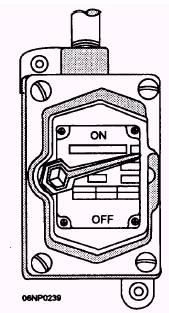
Figure 5-59 shows an explosionproof incandescent lighting fixture; figure 5-60 shows an explosionproof on-and-off switch for lighting. When the interior wiring system has been completely installed, make an overall inspection to be
Figure 5-60.- Explosionproof ON-and-OFF lighting switch. sure that good installation practices have been observed and all connections are correct. While you are making this check, do not forget neatness. Make sure that ground connections are tight and that ground wire is protected against injury. Be sure that all connections in the entrance switch and panelboards are tight. See that all metal noncurrent-carrying parts of portable equipment are grounded
|
 
|
|
|